


Try It Risk Free: 30-Day Money Back Guarantee
Dog Nail Scratch Board with Treat Drawer All Sizes
Dog Nail Scratch Board with Treat Drawer All Sizes
Couldn't load pickup availability
Dog Nail Scratch Board with Treat Box: Stress-Free Nail Filing for All Dog Sizes
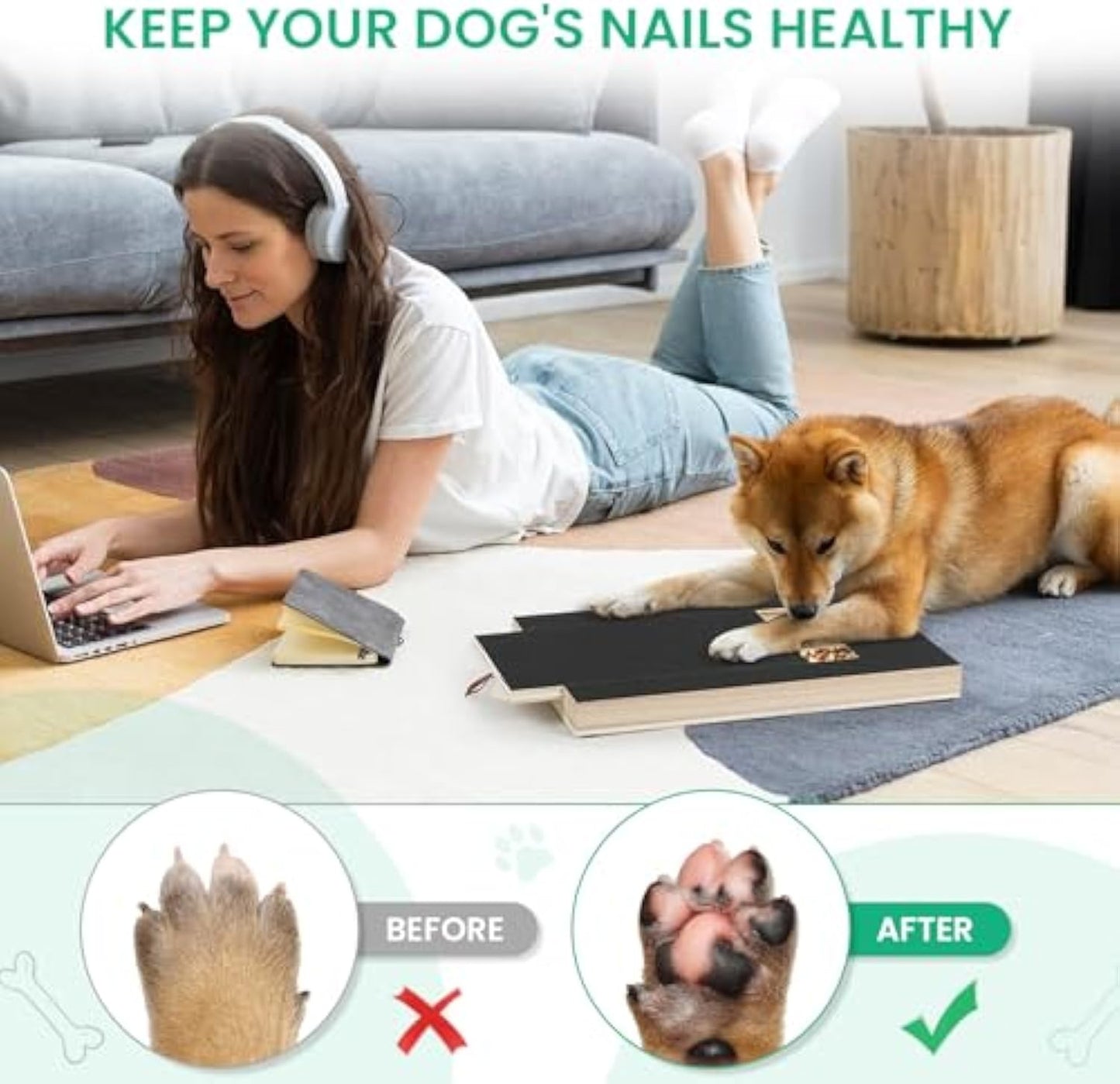
Nail clippers stress most dogs out. Grinders stress most dogs and most owners out. This wooden dog nail scratch board offers a third option: your dog files their own front nails by scratching at the abrasive surface while working to reach the treats in the lockable drawer. No handling paws. No clippers near the quick. No restraint. The lockable treat drawer lets you control when treats are released, so your dog learns that scratching equals reward — and nail length gradually decreases every session. Suitable for small, medium, and large dogs. 4 non-slip feet. Premium multi-layer wood construction.
Why Cooperative Nail Care Changes the Experience for Anxious and Clipper-Averse Dogs
Nail trimming is one of the most anxiety-provoking grooming tasks for dogs — and for their owners. The combination of paw handling, an unfamiliar tool, the risk of cutting the quick, and the restraint required for a struggling dog creates a negative association that compounds over time. A dog that was manageable for nail trims at 6 months can become actively resistant by the time they are 2 years old, and that resistance intensifies with each difficult session.
Scratch boards work on a completely different principle. Rather than something being done to the dog, the dog is the one doing something — scratching toward a treat reward. Cooperative care is partnering with the animal and allowing them to be part of the decision to proceed, using treats, toys, or praise as rewards. The most popular method of cooperative care for dog nail trims is to use a dog scratch pad to teach your dog to file down their own nails. The nail shortening happens as a natural consequence of the scratching motion against the abrasive surface, and the dog's association with the experience is positive rather than negative — because every session involves working toward a reward they can see and smell.
This specific board adds the lockable treat drawer as the motivational engine. The treats are visible and accessible through the drawer, the manual lock switch controls whether the dog can reach them, and the scratching motion across the abrasive surface is the behaviour you are rewarding with access to those treats. The 4-sided non-slip rubber feet keep the board stable on hard floors during active pawing, and the multi-layer wood construction holds up to the daily sessions that consistent nail maintenance requires.
Key Benefits of This Dog Nail Scratch Board with Treat Drawer
- Lockable treat drawer with manual switch lets you control exactly when your dog accesses the treats — open the drawer to reward scratching behaviour, lock it to extend the session before reward, and gradually shape the duration of scratching your dog will do before getting their treat.
- No paw handling required — the entire nail filing process happens through your dog's own voluntary scratching motion, making it suitable for dogs who refuse to have their paws touched, paw-sensitive dogs, and dogs with a history of difficult nail trims.
- Abrasive scratch surface gradually files down nail length with each session — consistent daily or every-other-day use across a week or 2 produces noticeable reduction in nail length for dogs who engage fully with the board.
- 4 non-slip rubber foot pads secure the board on hard floors and tile surfaces during active pawing — the board does not slide, tip, or move away from the dog as they scratch, which keeps the filing contact consistent and prevents frustration.
- Premium multi-layer wood construction is durable enough for daily sessions without the surface warping, the drawer mechanism deteriorating, or the board splitting at the edges under normal use.
- Compatible with small, medium, and large dogs — the board surface dimensions and treat drawer placement work across the full range of adult dog sizes without requiring size-specific variations.
- Treat drawer doubles as enrichment and mental engagement — the combination of a visible treat reward and the motivation to figure out how to access it creates a puzzle-solving element that provides mental stimulation alongside the physical nail care benefit.
- Stress-free grooming experience for both dog and owner — replacing the restraint-and-clipper session with a voluntary game-based approach removes the anxiety and struggle from what is typically the most dreaded grooming task for both parties.
What Pet Owners Value Most About Nail Scratch Boards with Treat Drawers
- The first time a nail-phobic dog voluntarily approaches a grooming tool is the moment owners describe as the breakthrough. Dogs that run from clippers and grinders are drawn toward the scratch board because it looks and smells like a treat puzzle rather than a grooming device. That initial approach is the starting point for building a positive grooming habit that gets easier with every session rather than harder.
- The lockable drawer gives owners meaningful control over the training process. Treat drawers that open too easily reward nudging rather than scratching — which is the most common complaint about basic scratch boards without a locking mechanism. The manual switch on this board means you decide when scratching has earned the reward, not the dog. That control is what allows you to gradually increase the amount of scratching required per treat across successive sessions.
- It works alongside regular nail care, not as a complete replacement for it. Dog scratch boards are used to train dogs to file down their own nails without the anxiety that may come from using a nail clipper or dremel. They are great cooperative care options for dogs who do not like having their feet touched. For dogs with very long nails or significant overgrowth, a veterinarian or professional groomer may need to address the initial length reduction before the scratch board becomes the primary maintenance tool. But for ongoing maintenance between professional trims, the scratch board is the daily routine that keeps nail length manageable.
- The multi-layer wood construction earns consistent durability praise. Plastic scratch boards crack at the base and develop flex in the surface over weeks of use. Multi-layer wood maintains its rigidity and surface stability across months of daily sessions, and the reward of consistent, predictable filing contact is directly tied to the board staying stable and flat during use.
- Dogs learn this faster than most owners expect. Most dogs figure out the scratch pad within 1 thirty-minute session, especially if the dog already knows how to target objects with their front paws. With the treat drawer as the motivational cue, even dogs without prior targeting training can usually be guided through the scratching behaviour within a few short sessions using standard reward-based training techniques.
What the First 2 Training Sessions With This Board Look Like
Session 1: Place the board on the floor with the non-slip feet down and a treat visible in the unlocked drawer. Let your dog investigate freely. When they make any paw contact with the board surface — even a brief touch — mark that behaviour with a verbal cue or clicker and allow access to the treat. Repeat 5 to 10 times in the first session, ending while your dog is still engaged and motivated. Keep sessions short — 5 to 10 minutes maximum — and positive throughout.
Session 2: Lock the drawer before your dog approaches. Guide or encourage them to paw the scratch surface. After 2 to 3 deliberate scratching strokes across the abrasive surface, unlock the drawer and allow treat access. The goal is to connect the specific scratching motion across the abrasive surface to the treat reward — not just any paw movement on the board. Over 3 to 5 sessions, most dogs understand the sequence clearly enough to begin the session voluntarily.
Within a week of consistent short sessions, most dogs approach the board independently when they see it placed on the floor. The nail filing is happening during every scratching session. Your primary job at that point is managing session length and replacing the abrasive surface pad when it loses its texture — the dog is handling the nail maintenance themselves.
Dog Nail Scratch Board: Specs and What Is Included
- Material: premium multi-layer wood construction
- Filing surface: replaceable abrasive scratch pad
- Treat compartment: lockable drawer with manual lock/unlock switch
- Stability: 4 non-slip rubber foot pads
- Compatible dog sizes: small, medium, and large breeds
- Package dimensions: 35 × 25 × 5 cm (13.8 × 9.8 × 2.0 in)
- Primary use: front paw nail filing (see FAQ for rear paw guidance)
- Suitable for: dogs with clipper anxiety, paw-sensitive dogs, dogs with a history of difficult nail trims, and as a daily nail maintenance tool alongside professional grooming
- Package includes: 1 × dog nail scratch board with treat drawer
Dog Nail Scratch Board FAQs: Training, Effectiveness, and Honest Limitations
Will this file my dog's back nails as well as their front nails?
Scratch boards are designed primarily for front paw nail filing. Back nails are significantly harder to file using a scratch board because the rear scratching motion dogs naturally use does not create the same abrasive contact with the surface. The good news is that rear nails typically grow more slowly than front nails due to the natural wear from walking and pushing off during movement. For dogs whose rear nails also need maintenance, a combination approach — scratch board for front nails, professional trim or careful clipper use for rear nails — is the most practical ongoing routine.
How do I prevent my dog from nudging the treat drawer open without actually scratching?
Yes, this is the most important training step, and the manual lock switch on this board is specifically designed to address it. Keep the drawer locked at the start of every session. Your dog cannot nudge it open — they have to scratch the abrasive surface first, at which point you unlock the drawer as the deliberate reward for the correct behaviour. Never leave the drawer unlocked during unsupervised access, as this removes the scratching requirement and teaches the nudging shortcut. The lock is what makes the treat-and-scratch training loop work correctly.
How long does it take for a dog to learn to use this consistently?
Most dogs figure out the scratch pad within one 30-minute session, particularly if they already know how to target objects with their front paws. Dogs without prior targeting training may need 3 to 5 short sessions of 5 to 10 minutes each. Training progress varies by individual dog temperament, prior paw sensitivity, and how motivated they are by the treat reward. Highly treat-motivated dogs typically learn fastest. Dogs with significant paw sensitivity may take longer and benefit from starting with sessions that reward any paw contact with the board before gradually shaping toward deliberate scratching.
How often should my dog use this board to see noticeable nail reduction?
Yes, daily short sessions of 5 to 10 minutes produce the most consistent nail maintenance results. At that frequency, most dogs show measurable nail length reduction within 1 to 2 weeks of consistent use. Every-other-day sessions are sufficient for dogs with slower nail growth or as maintenance for dogs who already have nails at a manageable length. The scratch board is most effective as a regular maintenance tool — keeping nails from getting long — rather than as a rapid reduction tool for severely overgrown nails, which typically require professional attention first.
What treats work best in the drawer for training?
Yes, small, high-value treats that fit easily in the drawer and create a strong smell signal work best. Small pieces of chicken, cheese, hot dog, or commercial training treats that are approximately 1 cm or smaller are ideal — small enough that multiple treats fit in the drawer and the dog remains motivated across a full session without filling up on large pieces. The treat scent visible through or from the drawer is the primary motivational draw before the dog understands the scratching mechanic, so high-value, strongly scented options accelerate the training process significantly.
When should I replace the abrasive surface pad?
The abrasive surface pad is the working component of the nail filing system — when it loses its texture and becomes smooth, the filing effectiveness decreases. Inspect the pad surface regularly and replace it when you notice the filing contact producing less visible nail dust or when the texture feels noticeably smoother than when new. For dogs using the board daily, pad replacement frequency depends on the size and scratch intensity of the dog — larger dogs with more vigorous scratching will wear the pad down faster than smaller, lighter dogs. Replacement pads in the appropriate size for this board are available separately.
Can I use this with a puppy, or is it better to wait until the dog is fully grown?
Yes, introducing a scratch board early in a puppy's life is one of the most effective approaches to building a positive nail care habit before any negative associations develop. Puppies are highly treat-motivated and adapt quickly to new training tools, making the initial learning sessions typically faster than with adult dogs who already have established anxiety around paw handling. Start with very short sessions of 2 to 3 minutes and very high-value treats, and progress at the puppy's pace rather than pushing for scratching volume too early. Early positive associations with the board create a strong foundation for lifetime cooperative nail care.
The Nail Trimming Session Your Dog Will Actually Cooperate With.
Premium multi-layer wood. Lockable treat drawer with manual switch. 4 non-slip rubber feet. Replaceable abrasive surface. Compatible with small, medium, and large breeds. A nail filing routine that your dog chooses to participate in because the reward is visible, the game is clear, and the only thing being asked of them is the scratching behaviour they were already going to do anyway. 35 × 25 × 5 cm package. Front paw nail maintenance — the most frequent and most anxiety-provoking part of the nail care routine — handled without clippers, without restraint, and without a trip to the groomer for every session.


30-Day Money-Back Guarantee
Try it for 30 days. If you don’t love it, email us for a full refund—no questions asked.

FREE GIFT: ACCESS TO THE 21-DAY HEALTH CHALLENGE ($97 VALUE)
With your purchase today you receive complimentary free instant access to our 21-day health challenge. A fun step-by-step 3-week challenge to nourish your body, fix bad habits and create healthy ones!
Shop with Confidence and Peace of Mind
- Trusted by 10,000+ customers since 2018
- 30-day money-back guarantee
- Hassle-free returns
- Tracked worldwide shipping